
A fusion splicer is a precision instrument used to permanently join two optical fibers by melting their ends together with a controlled electric arc. The result is a low-loss, high-strength splice that behaves almost like a continuous fiber, which is critical for long-distance telecom networks, FTTH deployments, and data center interconnects.
How Does a Fusion Splicer Work?
The splicer strips, cleans and cleaves each fiber, then aligns the two cores with sub-micron precision using motorized stages and image-processing cameras. Once aligned, a pair of electrodes generates a short arc that fuses the glass. Modern splicers automatically measure splice loss, proof-test the joint, and heat-shrink a protection sleeve over the splice point.
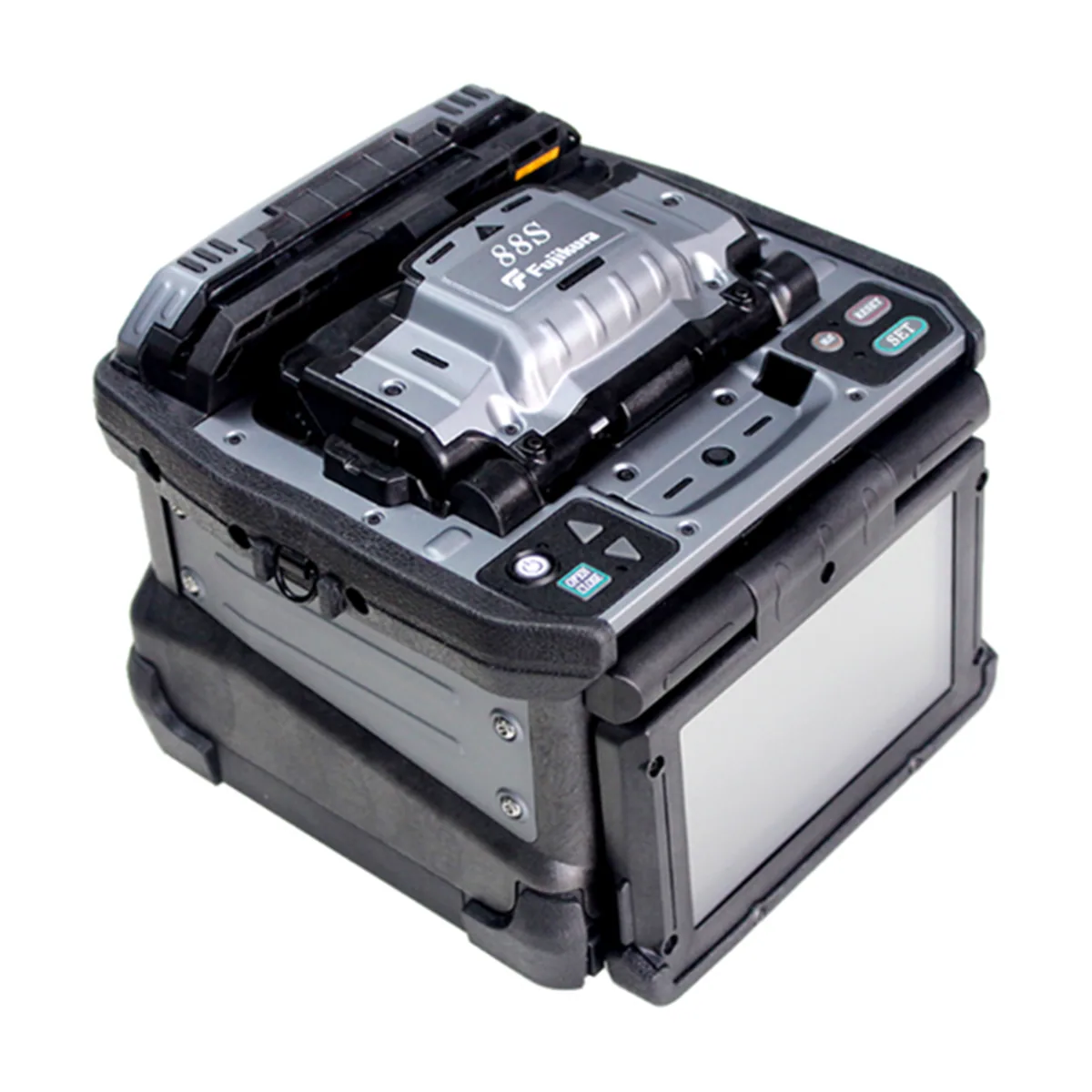
Types of Fusion Splicers
Core Alignment Fusion Splicer
Core-alignment splicers use active profile alignment to line up the light-carrying cores directly. They deliver the lowest splice loss (typically 0.02 dB for SM fiber) and are preferred for backbone, long-haul, and DWDM networks where every tenth of a dB matters. Examples include the Fujikura 90S+ and Sumitomo TYPE-Q102.
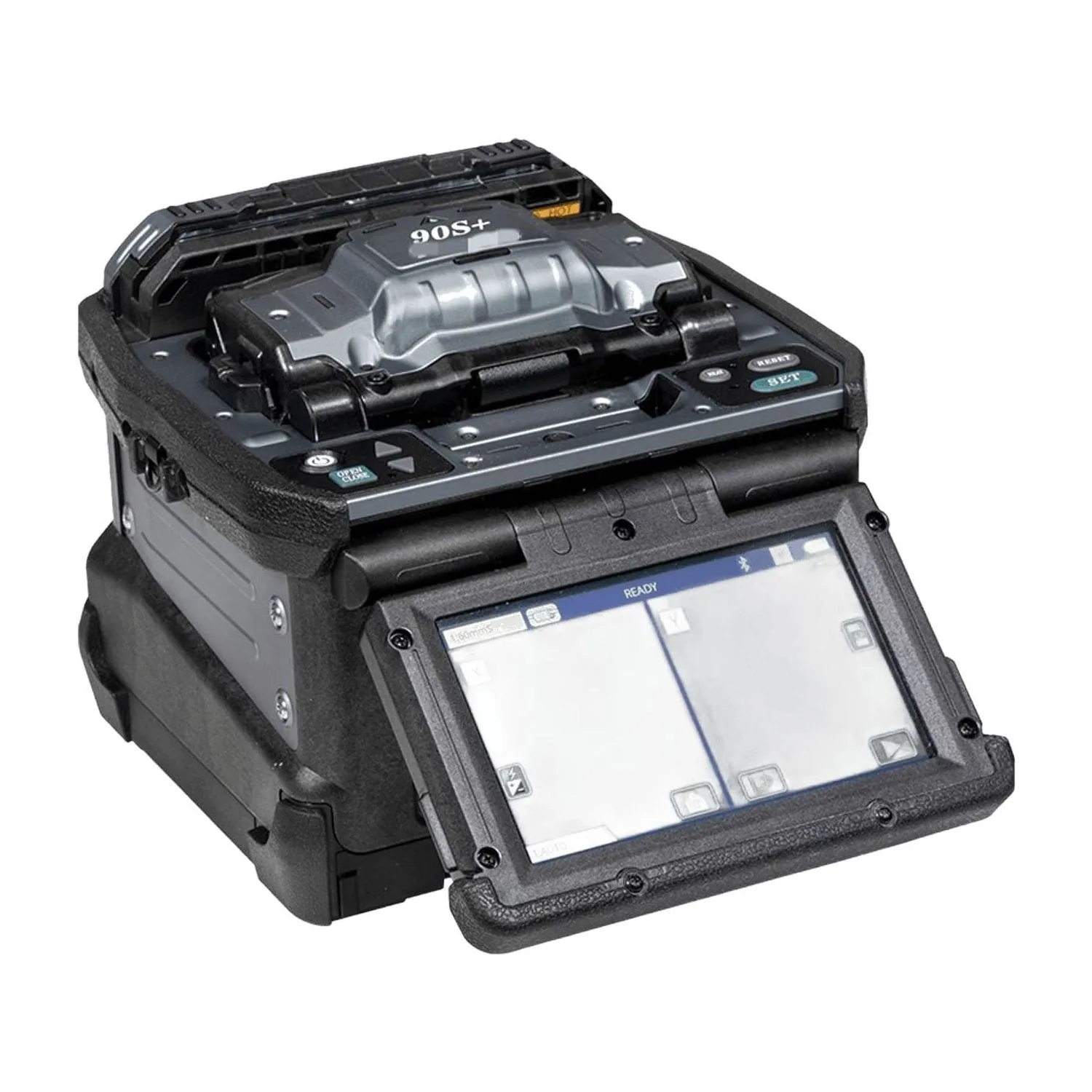
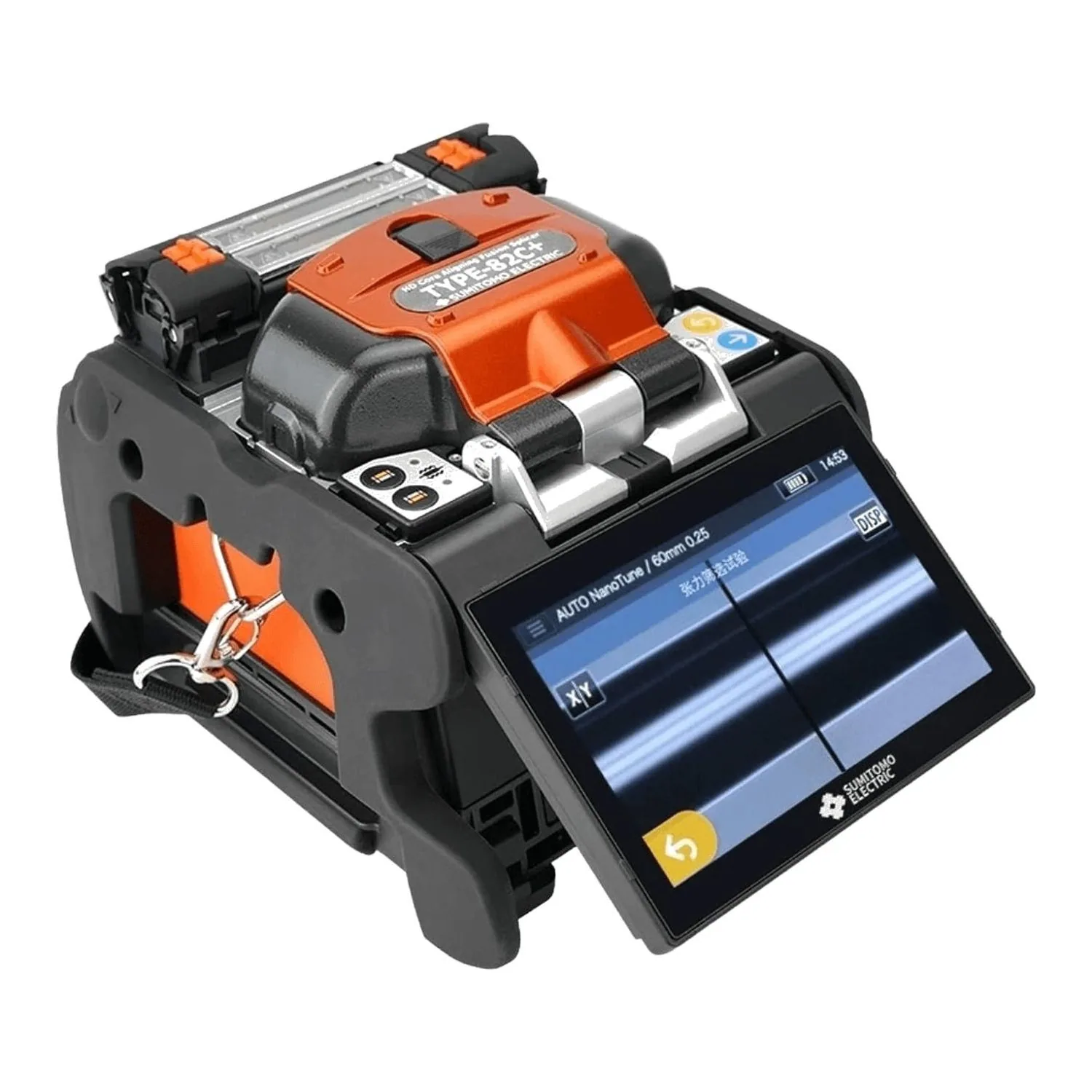
Cladding Alignment Fusion Splicer
Cladding-alignment (also called fixed V-groove) splicers align the fiber cladding instead of the core. They are faster, more affordable and well-suited to FTTH drop cables and access networks where typical splice loss around 0.05 dB is acceptable.
Where Are Fusion Splicers Used?
- Long-haul and metro telecom backbones
- FTTH (Fiber to the Home) deployments
- Data center structured cabling and interconnects
- CATV, utility, and railway communication networks
- Military and industrial sensing systems
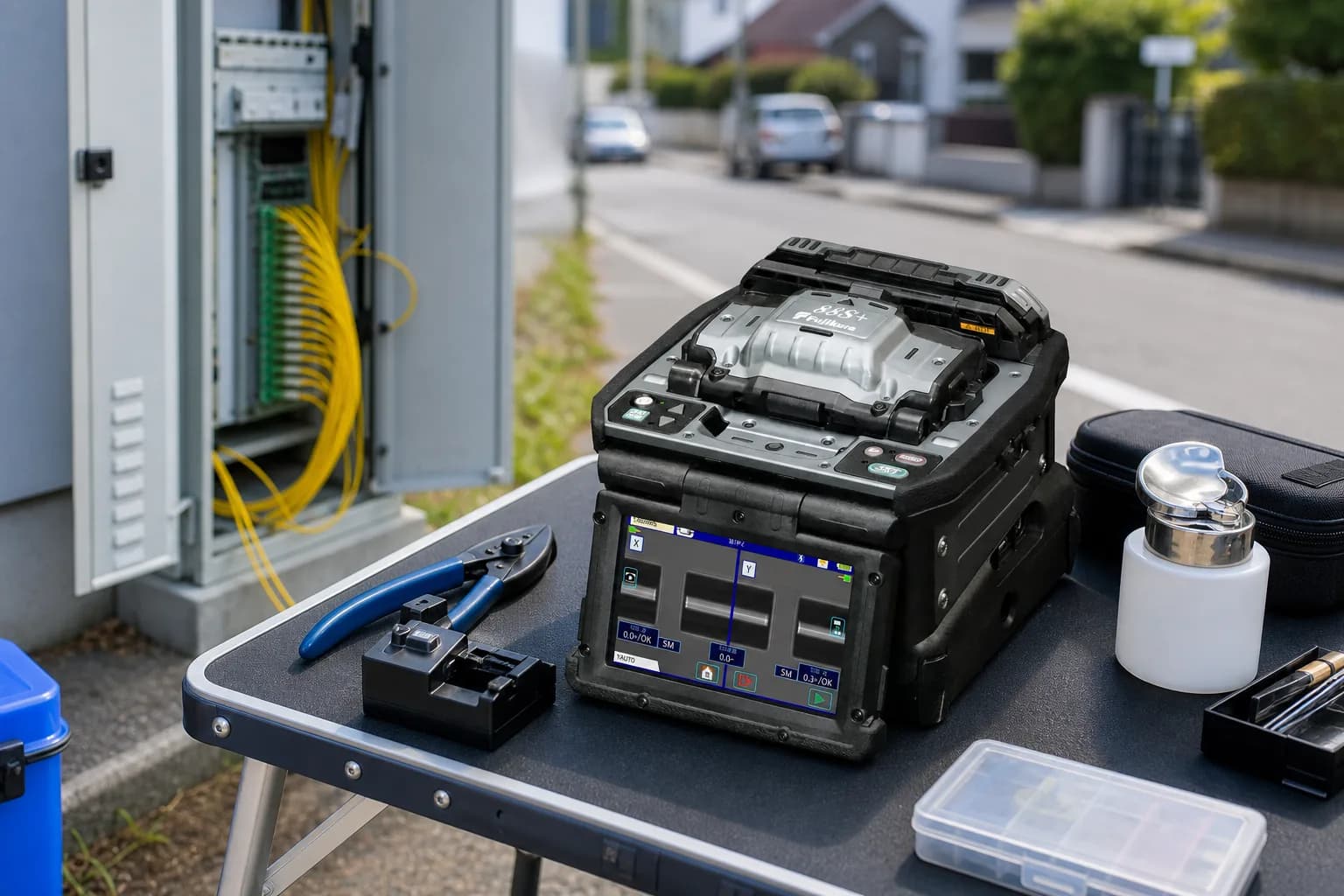
Main Fusion Splicer Brands
The market is dominated by three Japanese manufacturers — Fujikura, Sumitomo and INNO. Fujikura is known for reliability and its 90S/90R core-alignment platform. Sumitomo offers the TYPE-Q series with strong automation, and INNO provides cost-effective core-alignment models such as the View 8 Pro that fit smaller contractors.
How to Choose the Right Fusion Splicer
- Application: backbone/DWDM requires core alignment; FTTH drop work can use cladding alignment for better ROI.
- Splice loss target: typical SM core-alignment ≤ 0.02 dB, cladding-alignment ≤ 0.05 dB.
- Cycle time: modern splicers splice in 5–7 s and heat in 8–14 s, which matters for mass deployments.
- Ruggedness & battery life: IP-rated chassis and 200+ splice/heat cycles per battery for outdoor work.
- Service & parts: factor in electrode life, calibration, and local service availability.
Conclusion
A fusion splicer is an essential investment for any team deploying or maintaining fiber optic networks. Matching the splicer to your actual workload — backbone vs. FTTH, volume, environment — is more important than simply picking the most expensive model.
Need help choosing a fusion splicer?
Our team has deployed fusion splicers across APAC, the Middle East and Africa. Tell us your application and we'll recommend the best fit.